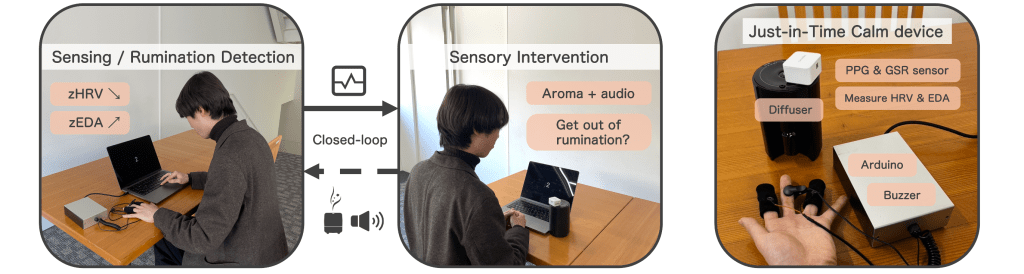
Many emotion-regulation methods—such as meditation and journaling—are designed on the premise that users must operate them proactively. However, in a state of “rumination,” where negative thoughts keep looping, the brain is effectively idling, making it difficult to initiate action independently. This study develops a system that detects rumination and automatically guides users toward calm. It measures electrodermal activity and heart rate variability in real time to automatically detect early signs of rumination. When rumination is detected, the system delivers interventions such as olfactory or auditory stimuli. We experimentally evaluate how the timing and type of intervention affect the persistence of the ruminative state.
瞑想や日記など多くの感情を整える方法は、ユーザーが自分で操作することを前提に設計されている。しかし、ネガティブな考えが頭の中をぐるぐる回る「反すう」状態では、脳がいわばアイドリング状態になっており、自分から行動を起こすことが難しいのが実情だ。そこで本研究は、反すう状態を検知し、自動で安らぎへ導くシステムを開発する。皮膚電気活動(汗により電気が流れやすくなる変化)や心拍変動(心拍ごとの間隔のばらつき)をリアルタイムに測定し、反すうの兆しをシステムが自動検出する。反すう状態を検知したタイミングで、匂いや音などの介入を行う。介入のタイミングおよび種類が反すう状態持続に与える影響を、実験で評価する。
Publication
Yutaro Hori and Yoshio Ishiguro. 2026. Just-In-Time Calm: Real-Time Physiological Detection of Rumination and Sensory Interventions. In The Augmented Humans International Conference 2026 (AHs 2026)
 Ishiguro Laboratory, The University of Tokyo